I was sitting at my desk last Tuesday, staring at a mountain of color-coded planners and feeling absolutely nothing but exhaustion. It hit me then: we’ve been sold this lie that building good habits requires a massive, overnight overhaul of our entire existence—the kind of “hustle culture” nonsense that leaves you burnt out before lunch. I spent years in Berkeley studying the psychology of behavior, and if there is one thing I’ve learned, it’s that most “productivity hacks” are just expensive distractions from the truth. We don’t need more complicated systems or aesthetic apps; we need to stop fighting our own brains.
In this post, I’m stripping away the fluff to give you a roadmap rooted in actual behavioral science. I’m not going to promise you a “perfect life” by Monday, but I will show you how to leverage small, intentional shifts that respect your mental energy. We are going to focus on the psychology of why we fail and, more importantly, how to design a lifestyle where meaningful progress feels effortless rather than forced. Let’s get to work on what actually matters.
Table of Contents
Decoding the Cue Routine and Reward Loop

To really master your schedule, you have to stop looking at habits as mere willpower and start seeing them as neurological loops. Based on my background in psychology, I’ve found that everything we do—from checking our phones the second we wake up to that mid-afternoon caffeine hit—is driven by the cue routine reward loop. Think of the cue as the trigger, like a specific time of day or a feeling of boredom; the routine is the action you take; and the reward is the hit of dopamine your brain craves.
Understanding this cycle is the secret sauce of behavioral change psychology. When we try to force a new behavior through sheer grit, we usually fail because we aren’t addressing the underlying trigger. Instead of fighting yourself, try to deconstruct your current patterns. If you notice you always snack when you’re stressed, that stress is your cue. By identifying these invisible links, you can begin to intercept the loop, making it much easier to swap out an unproductive ritual for something that actually serves your long-term goals.
Applying Atomic Habits Principles to Your Purpose

Once you understand how that loop functions, the next step is to stop viewing your goals as massive, intimidating mountains and start seeing them as a series of tiny, manageable shifts. This is where we lean into atomic habits principles to bridge the gap between where you are and where you want to be. Instead of promising yourself you’ll meditate for an hour every morning, try starting with just two minutes. When we leverage the neuroscience of habit formation, we realize that our brains crave the path of least resistance. By shrinking the scale of the task, you bypass that internal resistance that usually leads to procrastination.
To make these shifts stick, I highly recommend experimenting with habit stacking techniques. I do this in my own life all the time; for instance, I’ll pair my morning coffee with five minutes of bullet journaling. By anchoring a new, purposeful action to an existing, rock-solid routine, you create a mental bridge that makes the new behavior feel almost automatic. It’s not about sheer willpower; it’s about designing an environment where your success becomes the easiest option available.
Small Shifts, Big Impact: My Five Go-To Strategies for Lasting Change
- Stop aiming for perfection and start with “micro-habits.” When I first started my consulting practice, I realized that trying to overhaul my entire morning routine at once was a recipe for burnout. Instead of committing to an hour of meditation, just commit to three deep breaths. Make the barrier to entry so low that it feels almost silly to say no.
- Use “Habit Stacking” to anchor new behaviors. My psychology background taught me that our brains love patterns. Don’t try to build a habit in a vacuum; tether it to something you already do without thinking. If you want to start a daily journaling practice, tell yourself, “After I pour my first cup of coffee, I will write one sentence in my planner.” You’re piggybacking on an existing neural pathway.
- Design your environment for success, not willpower. Willpower is a finite resource, and frankly, it’s a flaky friend. If you want to eat more fruit, put it in a beautiful bowl right in the center of your kitchen counter instead of hiding it in the crisper drawer. If you need to focus, put your phone in another room. Make the good habits easy to see and the bad ones hard to reach.
- Focus on identity, not just outcomes. This is the psychological secret sauce. Instead of saying, “I’m trying to run a marathon,” start saying, “I am a runner.” When you shift your internal narrative from something you do to something you are, your actions naturally begin to align with that new self-image. You aren’t just checking a box; you’re becoming the person you want to be.
- Celebrate the “small wins” to fuel your dopamine loop. We often wait until we reach a massive milestone to feel successful, but that’s a long time to go without a reward. I keep a tiny gold star sticker in my planner—it sounds silly, but there is something incredibly satisfying about acknowledging a win. That hit of dopamine reinforces the behavior and tells your brain, “Hey, this felt good, let’s do it again tomorrow.”
Making Habits Stick: My Three Golden Rules
Stop aiming for perfection and start aiming for consistency; it’s much better to do a two-minute version of a habit than to skip it entirely because you don’t have an hour to spare.
Audit your environment to make good habits easy and bad habits difficult—if you want to journal more, leave your planner open on your desk the night before.
Connect your daily actions to your deeper “why” rather than just checking boxes, because a habit fueled by purpose is much harder to break than one fueled by sheer willpower.
The Rhythm of Intentionality
“Building a habit isn’t about the sheer force of willpower; it’s about designing a life where your smallest, most intentional actions naturally align with the person you’re striving to become.”
Ella Thompson
Finding Your Rhythm
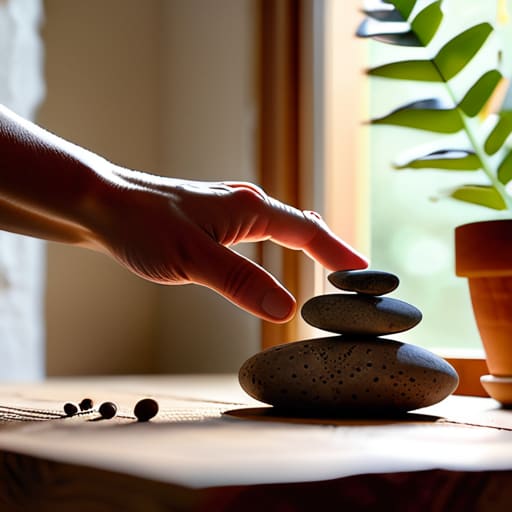
As we wrap up, remember that building better habits isn’t about a sudden, radical overhaul of your entire existence. It’s about the subtle science of understanding your cues, refining your routines, and ensuring your rewards actually align with your long-term values. When you stop fighting against your brain’s natural wiring and start working with it—by applying those atomic principles to your specific purpose—you stop spinning your wheels. You aren’t just checking boxes on a to-do list; you are reprogramming your daily experience to serve the person you are becoming.
I often look at my vintage hourglasses when I feel the urge to rush through my tasks, and it reminds me that time is a finite, beautiful resource. Please, don’t let the pursuit of “perfect” productivity rob you of the joy in the process. There will be days when a habit slips, and that is perfectly okay. The goal isn’t to be a flawless productivity machine; it’s to cultivate intentionality in the small moments. Trust your rhythm, be patient with your progress, and remember that every tiny, consistent action is a vote for the life you want to lead. You’ve got this.
Frequently Asked Questions
How do I stop myself from falling back into old, unproductive patterns when life gets chaotic or stressful?
When life hits the fan, our brains naturally retreat to the “path of least resistance”—those old, unproductive loops. To fight this, don’t aim for perfection; aim for “minimum viable habits.” If you can’t do your full 30-minute morning routine, just do two minutes of mindful breathing. By shrinking the habit rather than abandoning it, you keep the neural pathway alive without adding to your stress. Consistency beats intensity every single time.
Is it better to focus on changing one major habit at a time, or should I try to overhaul my entire routine at once?
I’ll be honest: trying to overhaul your entire life overnight is a recipe for burnout. I see it all the time in my consulting practice. When you attempt to change everything at once, you exhaust your willpower, and that’s a finite resource. Instead, I recommend picking one “keystone habit”—that one small change that makes everything else easier—and mastering it first. Build that foundation before you try to move the mountains.
How can I tell if a habit I've built is actually serving my long-term goals or if I'm just staying busy for the sake of it?
To figure this out, I always tell my clients to look past the “busywork” dopamine hit. Ask yourself: “If I only did this one thing today, would I feel closer to my vision, or just exhausted?” If your habit is just a way to avoid deeper, more meaningful work, it’s likely a distraction in disguise. True alignment feels like steady progress, even when it’s quiet. If it lacks intention, it’s just noise.
