I was sitting on my living room floor last Tuesday, surrounded by a chaotic mountain of tangled cotton cord and feeling completely defeated, when I realized something important. Most people think you need a room full of expensive tools and a natural talent for geometry to start, but that’s a total myth. When I first dove into macrame for beginners, I thought I needed to master every complex knot in the book just to hang a simple plant holder. In reality, the magic isn’t in the complexity; it’s about finding your rhythm within the repetitive motion of the cord.
In this guide, I’m stripping away the fluff and the overwhelming “expert” tutorials that leave you feeling more stressed than inspired. We aren’t going to chase perfection or get lost in endless, complicated patterns that lead to burnout. Instead, I’ll show you how to master the foundational knots and set up a workspace that actually supports your focus. You’ll learn exactly how to approach macrame for beginners as a way to reclaim your mental space and create something beautiful, one intentional knot at a time.
Table of Contents
- Step-by-Step Instructions
- Choosing Meaningful Materials Essential Macrame Tools List
- Mastering the Rhythm of Basic Macrame Knot Patterns
- Finding Your Flow: 5 Mindful Tips for the Aspiring Maker
- Finding Your Flow: My Three Golden Rules for Macrame
- Finding Your Flow in Every Knot
- Finding Your Flow in Every Knot
- Frequently Asked Questions
Guide Overview
Tools & Supplies
- Scissors for cutting cord
- Measuring tape for length accuracy
- S-hooks or dowel for hanging work
- Cotton macrame cord (3mm or 4mm) 1 roll
- Wooden dowel or ring 1 piece
- Masking tape for securing cord ends
Step-by-Step Instructions
- 1. Before you even touch a piece of cord, you need to set the stage. I always find that my brain works best when my physical environment is organized, so clear off a sturdy table and grab a dowel or a piece of driftwood. Most importantly, gather your materials: a spool of cotton macrame cord (3mm or 4mm is perfect for starting out) and a pair of sharp scissors. Think of this as setting your intentions before you begin the actual work.
- 2. The first real movement is the Lark’s Head Knot, which is how we actually attach our cord to our support beam. Fold your cord in half, pull the loop through the dowel, and then feed the two loose ends through that loop. It sounds a bit like a brain teaser, but once you do it a few times, it becomes muscle memory. This step is the foundation of your piece, so take a breath and ensure your tension is even right from the start.
- 3. Now, let’s tackle the “king” of macrame knots: the Square Knot. This is where the magic happens. You’ll take four strands of cord; the two in the middle act as your stationary core, while the two on the outside do all the dancing. Start by crossing the left cord over the center, then tuck the right cord under that left cord and pull it up through the loop. Repeat this with the right side to “lock” it. I like to think of it as creating a rhythmic pattern rather than just following a rule.
- 4. If you want to add some visual flair without much extra effort, try the Spiral Stitch. This is actually just a series of half-square knots. Instead of alternating sides every time, you simply keep repeating the same side—always crossing the same cord over the center. It creates a beautiful, twisting effect that looks incredibly professional but is surprisingly easy to master. It’s a great way to see how small, repetitive actions can create something complex and beautiful.
- 5. As you move through your knots, pay close attention to your “tension consistency.” This is where many beginners get frustrated. If you pull one knot tight and the next one loose, your project will look wonky. I often use one of my vintage hourglasses to remind myself to slow down; if I’m rushing, my knots suffer. Try to maintain a steady, gentle pull so that your work feels cohesive and intentional.
- 6. Once you’ve finished your pattern, it’s time for the “fringe phase.” This is actually my favorite part because it feels like the reward at the end of a long task. Take your scissors and carefully trim the bottom of your cords to create a clean, straight edge or a playful V-shape. This is your moment to reclaim your creative flow and see the tangible results of the focus you’ve applied.
- 7. Finally, give your piece a good shake and a gentle comb. If you used single-strand cotton, you can even use a wide-tooth comb to brush out the ends for a soft, boho-chic look. Don’t aim for perfection—aim for authentic expression. Even if a knot is a little wonky, it’s a testament to the fact that you showed up and practiced a new skill.
Choosing Meaningful Materials Essential Macrame Tools List
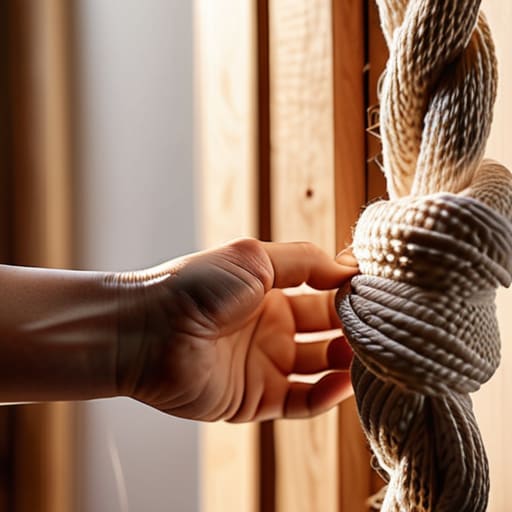
When I first started diving into fiber arts, I made the classic mistake of buying every shiny, colorful string I saw at the craft store. I quickly realized that the quality of your materials dictates more than just the look of your piece; it dictates your mental state during the process. If your cord is fraying or inconsistent, your focus will shatter. For those just starting, I highly recommend sticking to cotton rope for macrame crafts. It’s soft on the hands, holds your tension beautifully, and offers that tactile, grounding sensation that makes the practice so meditative.
As you compile your own essential macrame tools list, don’t feel pressured to invest in a professional studio setup. All you truly need is a sturdy pair of sharp fabric scissors, a few wooden dowels or a ring to hold your work, and perhaps a measuring tape to keep your rhythm steady. I personally love using a small piece of masking tape to secure my cords to my desk; it prevents that frustrating “drift” and allows you to focus entirely on mastering your knots. Remember, the goal isn’t to have the most expensive kit, but to have tools that support your flow.
Mastering the Rhythm of Basic Macrame Knot Patterns
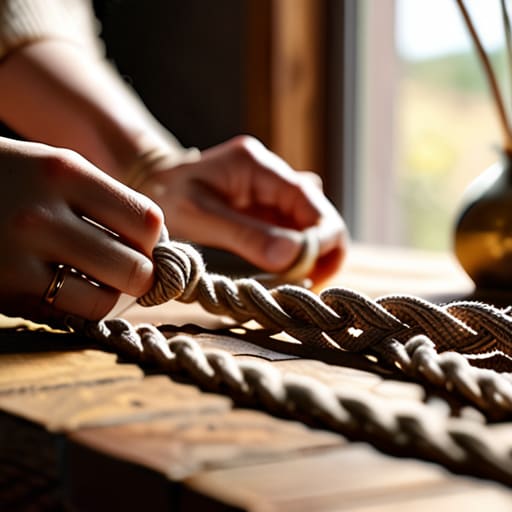
When I first sat down with a spool of cord, I thought productivity meant finishing a piece as fast as possible. I was wrong. I quickly learned that mastering the rhythm of basic macrame knot patterns isn’t about speed; it’s about finding a flow state. Just like when I use my vintage hourglasses to time my deep work sessions, I’ve found that macrame requires a specific kind of mental pacing. If you rush the knots, your tension will be uneven, and you’ll end up frustrated. Instead, try to treat each knot as a single, intentional movement.
As you practice, you’ll notice that your hands start to move almost instinctively. This is where the magic happens—the point where the craft stops being a chore and starts being a form of moving meditation. Whether you are working with soft cotton rope for macrame crafts or a sturdier twisted cord, focus on the tactile sensation of the fiber. If you find your mind wandering to your endless to-do list, simply pause, breathe, and return to the rhythm of the knot. This is how you turn a simple hobby into a meaningful ritual.
Finding Your Flow: 5 Mindful Tips for the Aspiring Maker
- Don’t let a tangled knot ruin your momentum; when things get messy, step away from the cord and flip over one of my vintage hourglasses to reset your focus before trying again.
- Resist the urge to rush through the patterns to reach a finished product, because the real magic happens in the rhythmic, meditative repetition of the knots themselves.
- Curate your workspace to minimize cognitive load—keep only your essential cords and a single pair of sharp scissors within reach to prevent decision fatigue while you create.
- Embrace the “imperfection principle” by remembering that a slightly uneven knot is just a physical record of your unique rhythm, not a failure of technique.
- Schedule your macrame sessions in small, intentional blocks rather than marathon marathons, allowing you to stay present in the craft without feeling overwhelmed by the scale of your project.
Finding Your Flow: My Three Golden Rules for Macrame
Don’t let a tangled cord ruin your momentum; view every knotting mistake as a psychological cue to slow down, breathe, and reset your rhythm rather than a failure of skill.
Prioritize intention over complexity by mastering a few foundational knots deeply, rather than rushing through intricate patterns that leave you feeling frazzled and disconnected.
Treat your crafting time as a mindful ritual, using the repetitive motion of the cords to anchor yourself in the present moment and reclaim a sense of calm amidst a busy week.
Finding Your Flow in Every Knot
“Don’t let the complexity of a pattern intimidate you; macrame isn’t about achieving immediate perfection, but about finding that meditative rhythm where each knot becomes a way to quiet the noise and reclaim your focus.”
Ella Thompson
Finding Your Flow in Every Knot
As we wrap up this journey into the world of macrame, I want you to take a moment to look back at how far you’ve come. We’ve moved from selecting the perfect, tactile cords to understanding the rhythmic dance of the basic knots that form the foundation of every beautiful piece. Remember, the goal wasn’t just to memorize a list of tools or a sequence of movements, but to learn how to approach a new skill with intention. By focusing on the quality of your materials and the steady pace of your hands, you’ve already laid the groundwork for a practice that is as much about mental clarity as it is about home decor.
Moving forward, please don’t let the fear of a tangled cord or a messy knot hold you back from your next creation. In my own life, I’ve learned that the most beautiful results often come from the moments where we allow ourselves to slow down and simply exist within the process. Macrame is your personal space to practice mindfulness; it is a way to reclaim your time and turn a simple string into something profound. Trust your hands, embrace the imperfections, and remember that true productivity is found in the joy of the craft. Now, go ahead—pick up that cord and find your rhythm.
Frequently Asked Questions
How do I know if I'm tensioning my knots too tightly or too loosely as I'm learning?
It’s so easy to get caught up in the perfectionism of it all! I used to do the same thing with my bullet journaling—over-tightening everything until the paper buckled. If your knots look uneven or your cord feels strained, you’re likely pulling too hard. Conversely, if the pattern looks “floppy” or loses its shape, you need more tension. Aim for a consistent, gentle rhythm; if the cord feels like it’s fighting you, ease up.
Is it better to start with a small wall hanging or should I jump straight into something like a plant hanger?
Honestly, I’d recommend starting with a small wall hanging. I know the urge to jump straight into a plant hanger is real—they’re so rewarding—but there’s a psychological “win” in finishing a smaller project first. It builds your confidence and prevents that overwhelming feeling of being mid-knot with a massive project hanging over your head. Master the rhythm with something small, then let your creativity grow into those larger, more complex pieces.
How can I use macrame as a way to decompress after a long day without it feeling like just another task on my to-do list?
To keep macrame from feeling like a chore, stop viewing it as a “project” to complete and start seeing it as a rhythmic ritual. I love setting a timer on one of my vintage hourglasses—not to rush, but to carve out a sacred, guilt-free window for creativity. Forget the finished wall hanging for a moment. Just focus on the tactile sensation of the cord and the repetitive motion of the knots. Let the process be the reward, not the product.
